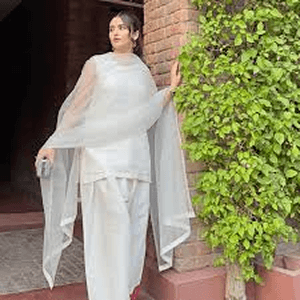
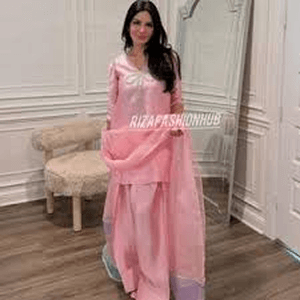
The Farshi Shalwar is a traditional South Asian garment known for its regal, floor-grazing silhouette. Originating from the Mughal era, it was favored by royal women for its grandeur and elegance. The term "Farshi" derives from the Persian word "farsh," meaning "floor," aptly describing its trailing design .
Key Features
- Design: Characterized by a wide, flowing cut that extends outward and pools gracefully on the floor, resembling a lehenga or skirt but with the comfort of a shalwar
- Fabric & Embellishments: Crafted from luxurious materials like raw silk, organza, and cotton, often adorned with intricate embroidery, pleats, and embellishments
- Pairing: Traditionally worn with a long or short kameez and a dupatta, making it suitable for weddings, festivals, and formal occasions
Styling Tips
- Footwear: Opt for embellished khussas, classic heels, or delicate juttis to complement the outfit’s elegance. Avoid chunky shoes that can disrupt the flow of the shalwar
- Accessorizing: Pair with statement jewelry and a polished makeup look to enhance the regal appeal
- Movement: Since the Farshi Shalwar is floor-length, practice walking gracefully, perhaps holding one side slightly or draping the ends over your arm for added elegance .